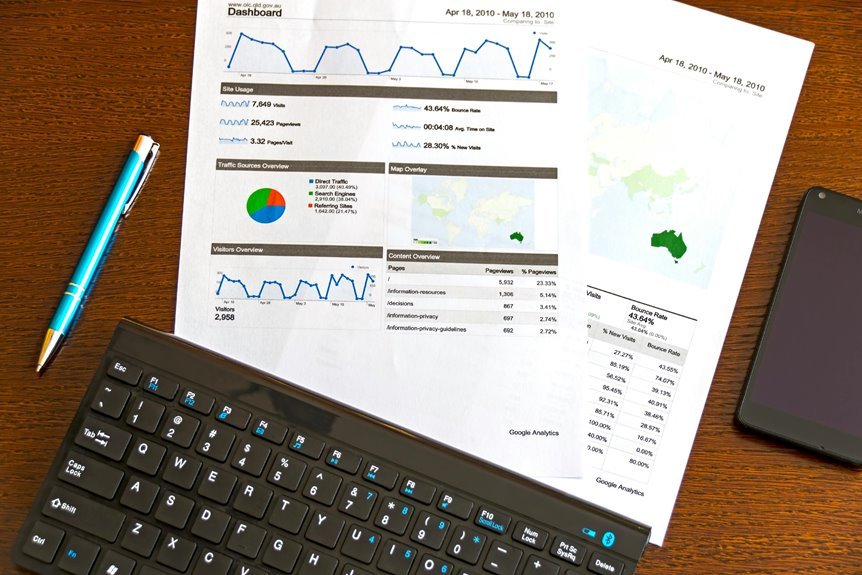

The Business Performance Dashboard, characterized by its unique identifiers, serves as a critical instrument for organizations aiming to enhance decision-making processes. By consolidating various data streams, it offers real-time insights that can significantly influence operational strategies. The dashboard’s customizable features further enhance its utility across different sectors. However, the question remains: how can organizations effectively implement these dashboards to maximize their potential and drive tangible results?
Key Features of Business Performance Dashboards
Business performance dashboards serve as vital tools for organizations seeking to monitor and enhance their operational efficiency.
Key features include data integration capabilities that consolidate information from various sources, allowing for comprehensive analysis.
Additionally, user customization options enable individuals to tailor the dashboard to their specific needs, promoting a more intuitive experience.
These attributes empower users to make informed decisions swiftly and effectively.
Benefits of Real-Time Data Visualization
The immediacy of real-time data visualization significantly enhances decision-making processes within organizations.
By ensuring data accuracy, it facilitates effective performance monitoring and trend analysis, enabling stakeholders to engage meaningfully.
Custom reporting tools allow for tailored insights, fostering an environment where informed decisions are made swiftly.
Ultimately, this dynamic approach empowers organizations to adapt and thrive in a rapidly changing business landscape.
Implementing a Business Performance Dashboard
Real-time data visualization lays the groundwork for implementing a business performance dashboard that effectively consolidates key performance indicators (KPIs) and metrics in a single, accessible interface.
Successful implementation requires robust dashboard integration strategies to ensure seamless data flow.
Additionally, emphasizing user training importance fosters familiarity and enhances utilization, ultimately empowering users to leverage insights that drive informed decision-making and enhance organizational performance.
Case Studies: Success Stories With Dashboards
Numerous organizations have successfully leveraged business performance dashboards to transform their operations and achieve remarkable outcomes.
For instance, a retail chain utilized dashboard metrics to enhance user engagement, resulting in a 30% increase in sales.
Similarly, a healthcare provider improved patient satisfaction by tracking performance indicators in real-time, demonstrating how effective dashboard implementation can drive strategic decision-making and operational efficiency.
Conclusion
In conclusion, the transformative impact of business performance dashboards is undeniable, as evidenced by their ability to drive operational efficiency and enhance decision-making. However, the true potential of these tools lies not just in their features, but in the untapped insights that remain hidden within the data. As organizations continue to explore and implement these dashboards, the question lingers: what groundbreaking discoveries await those who dare to delve deeper into their analytics? The journey is just beginning.


 By
By